Bulk-generate & schedule posts in seconds with Smart Scheduling. Try now!
SaaS SEO: A complete advanced growth strategy guide for 2026
 Published by Sadia
SEO is an integral part of any digital marketing campaign. No wonder e-commerce stores, B2B companies, solopreneurs, and software-as-a-service (SaaS) businesses are adopting SEO to stay relevant and beat the competitors.
Most SaaS companies now have a full SEO function, including strategists, content writers, and link builders. They work closely with digital marketing teammates, including social media managers, ad specialists, and designers.
If you haven’t explored SEO before, this guide will walk you through SaaS SEO’s meaning, why it matters, and how to build a winning SaaS SEO strategy for 2026.
SEO stands for search engine optimization. It’s the practice of improving website pages, content, links, and layout so that search engines and users can easily find and use your site.
Now let’s dig into what SaaS SEO is and why it matters so much for SaaS companies.
What is SaaS SEO?
The easiest way to manage and grow your social channels.
Try ContentStudio for FREE
What is SaaS SEO?

SaaS SEO involves crafting, implementing, and analyzing search engine optimization strategies for a SaaS product with a clear business goal in mind, such as lead generation, free-trial sign-ups, paid customer acquisition, or investor interest. As the digital landscape evolves, Generative Engine Optimization (GEO): understanding how AI-powered search engines surface and rank content is becoming increasingly important for SaaS companies to stay competitive.
If you’ve ever wondered about SaaS SEO’s meaning, think of it as SEO designed for the subscription model. The goal is not just more clicks, but more qualified sign-ups that stick around and become long-term customers.
Since SEO drives website traffic from search engines, SaaS companies need to treat it as a core growth channel rather than an afterthought.
Most SaaS businesses, especially in B2B, rely heavily on visitors who land on their websites through Google. Done well, SaaS SEO becomes a repeatable way to attract people with a real problem who are actively looking for software to solve it.
In other words, SaaS SEO is about:
- Understanding your ideal users and their pain points
- Finding search terms that match those pains
- Creating content and pages that answer those queries
- Earning trust and authority so Google prefers your content over others
Whether you’re working on B2C or B2B SaaS SEO, the foundations are the same; what changes is the audience, buying cycle, and type of content you create.
How SaaS SEO differs from traditional SEO

Traditional SEO and SaaS SEO share the same building blocks, keywords, content, links, and technical health, but the context is different.
Here’s how SaaS SEO stands apart.
1. Conversions over raw traffic
A blog about recipes can live on ad revenue and pageviews. A SaaS company cannot.
For SaaS, the main goal is not “more traffic” but more:
- Free trial sign-ups
- Demo requests
- Qualified leads
- Paid accounts and upgrades
That means your SaaS SEO strategy has to focus on search terms and content formats that bring people who are ready to evaluate or buy a product, not just read and leave.
2. Built around personas and pain points
In SaaS, you rarely target “everyone.” You focus on specific roles and use cases:
- Social media managers
- Marketing agencies
- CMOs at mid-market companies
- Founders of small startups
A strong SaaS SEO strategy starts with real persona research. You identify what each persona struggles with, what language they use, and which search queries reflect those struggles. Then you create content that connects those pains to your product.
3. Long customer lifecycle and retention
SaaS revenue depends on subscriptions and retention, and OpenAI’s ChatGPT study reveals that AI-powered search is changing how users discover and evaluate software solutions, making it critical for SaaS companies to adapt their content strategies accordingly. SEO has to support the full lifecycle:
- Awareness content that educates new prospects
- Evaluation content that compares tools and shows ROI
- Onboarding and how-to content that reduces churn
- Advanced tutorials that support power users
This is especially important in B2B SaaS SEO, where deal cycles are longer, more stakeholders are involved, and buyers need more education and proof before converting.
4. Impact on CAC and LTV
Paid ads stop the moment you pause the budget. Evergreen SEO content, on the other hand, can continue to generate leads for months or years.
That means SaaS SEO, when done well, helps:
- Lower Customer Acquisition Cost (CAC) over time
- Improve Customer Lifetime Value (LTV) by attracting better-fit users
- Build brand authority that benefits all other channels
There are essentially two ways to bring traffic from search engines
i. Organic traffic
Organic traffic is the unpaid traffic you earn from ranking in search results.
Every web-based business that relies on search should understand this channel. SEO specialists improve rankings by targeting specific keywords with relevant content and strong user signals.
Organic traffic is built on:
- Relevant keyword research
- High-quality, useful content
- Strong technical foundations
- Internal links and backlinks
Organic results often take 3–12 months to show meaningful growth, but they can become a compounding, predictable source of leads.
ii. Search engine marketing
Search engine marketing (SEM) refers to paid advertising in search results (e.g., Google Ads).
Marketers who want fast visibility and clicks often turn to SEM campaigns, pay-per-click (PPC) ads, display ads, and shopping ads. This works well for testing offers, scaling fast, or covering keywords that are too competitive organically.
It is important to get reliable data for your campaigns. Since Google is the largest search engine, you can scrape Google search results to gather keyword and SERP data at scale.
The ideal setup for SaaS combines both:
- SEM to test messaging and get quick wins
- SEO is the long-term growth engine
Remember: SEO for SaaS isn’t a one-size-fits-all strategy. Every SaaS business has a different audience and price point. Your approach should fit your product, brand, and users, not someone else’s playbook.
The importance of SEO for SaaS: why you need a solid strategy
Most SaaS and e-commerce businesses start with paid ads to get initial users. That works, but it’s expensive and usually doesn’t scale forever.
SEO for SaaS companies offers an alternative: a more sustainable way to attract qualified visitors actively searching for software like yours. Many of the same principles apply to online stores, which is why understanding eCommerce SEO tips can strengthen long-term visibility.
Building organic traffic is steady work. It requires:
- A clear SaaS SEO strategy
- Consistent content creation
- Technical hygiene
- Ongoing link building and promotion
We’ll get to the specific tactics shortly. First, let’s clarify why SEO matters so much for SaaS growth.
Here are some key reasons SEO matters for SaaS in 2026.
i. SEO is an essential traffic source for SaaS
You need to understand SEO because it can bring thousands, sometimes millions, of relevant visitors to your website, blog, or SaaS landing page.
Top brands invest heavily in SEO. They:
- Put out helpful content
- Earn and build backlinks
- Publish on social media
- Partner with influencers and industry experts
They do this because they understand the ROI. Once a page ranks, it can bring new leads and customers without ongoing ad spend.
Social media and ads can also bring traffic, but they typically spike and fade. SEO, when maintained, behaves more like a flywheel, slow at first, then powerful.
ii. Ignoring SEO hands opportunities to your competitors
Competition analysis and search engine optimization go hand in hand. You can’t shape a strong SaaS SEO strategy without watching what your rivals are ranking for.
If you keep delaying SEO, your competitors are not just sitting around. They’re:
- Publishing articles that match your users’ questions
- Building links from relevant sites
- Improving their product pages and comparison pages
- Creating SEO content you wish you had published first
Every month you delay SEO is a month where competitors widen the gap in rankings, backlinks, and authority.
iii. SEO helps attract visitors with buying intent
Search is one of the strongest online intent signals. Someone types in a problem or product, then chooses which result to click.
That’s why SEO is such a powerful acquisition channel. It brings people who already have:
- A problem they want to solve
- A budget (in many cases)
- A sense of urgency
Your job is to refine your content strategy so that you attract searchers with buyer intent, not just curiosity.
To do that, you must understand:
- How your niche works
- What your audience struggles with daily
- How your product or service helps them succeed
- Why someone should pick your product instead of a competitor’s
Once you’re clear on these points, you can weave the answers into your homepage, feature pages, and blog content. Combined with solid keyword research, this is the heart of an SEO-optimized SaaS blog that actually brings customers, not just traffic.
If your content is getting indexed correctly, your site is fast, and your pages genuinely help readers, you can often see early traction within a few months.
iv. Effective keyword targeting generates leads and improves conversion
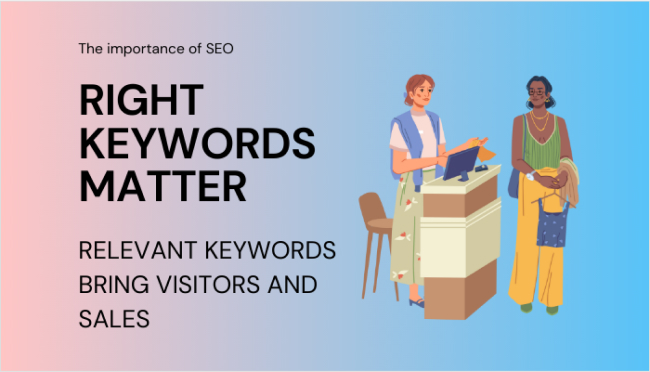
Many founders jump straight to “We need a full technical audit and advanced SEO for SaaS.” That can help, but if you’re just starting, you’ll get better returns by first mastering the fundamentals especially keyword research.
You don’t need a head-on fight with huge brands that spend six figures per month on SEO. Instead, you should:
- Learn how keyword research works
- Go after relevant terms with realistic competition levels
- Prioritize keywords that match your product’s core features
For early-stage SaaS, targeting low-competition, long-tail keywords on your blog is often the fastest way to early leads. Just make sure the content behind those keywords is outstanding, practical, clear, and aligned with your product.
v. SEO is often cheaper than ads and sponsorships
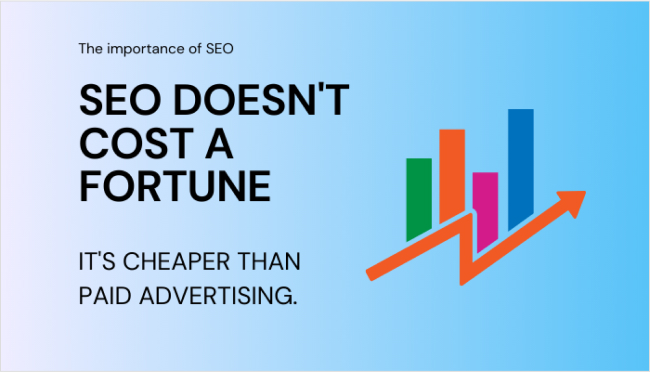
Some marketers argue that SEO is not cheaper than paid ads or influencer marketing. It depends on how you measure.
Most ads and sponsorship deals only perform as long as you keep funding them. Pause the spend and the traffic stops.
With SEO, you can:
- Hire a freelance SEO consultant or content writer for a defined project
- Build content and links that keep working long after you pay for them
- Reuse and update high-performing pages over time
In many companies, in-house SEO specialists handle backlink outreach, on-page improvements, off-page promotion, content updates, and publishing.
It’s common for SaaS companies to start their marketing program with SEO and content, then layer in paid social and search ads later as they learn what resonates.
Core pillars of SaaS SEO
Before we move into the 6-step framework, it helps to see SaaS SEO in three pillars:
- Technical foundation (your engine)
- Content (your fuel)
- Links (your oil)
1. Technical foundation
This is the structure and performance of your website:
- Clean site architecture and internal linking
- Fast loading times on desktop and mobile
- Secure HTTPS across the site
- Clear XML sitemap and logical URL structure
- No major crawl or indexation issues
Without this, even great content can underperform.
2. Content
This is everything people read and watch:
- Homepage and product pages
- Industry and use-case pages
- Comparison (“vs”) and alternative pages
- Blog posts, guides, templates, and videos
For SaaS SEO, you need both high-intent landing pages and educational blog content built around your keyword research.
3. Links and authority
Links help search engines judge trust and relevance:
- Internal links connect your own pages and guide visitors deeper
- Backlinks from other sites send authority and new visitors
Building E-E-A-T (Experience, Expertise, Authoritativeness, Trustworthiness) depends heavily on consistent content quality and strong link signals, especially in competitive B2B SaaS SEO spaces.
6-step SaaS SEO strategy
SEO is now non-negotiable in digital marketing. You need to set aside time, money, and energy to build and maintain a SaaS SEO strategy that supports your goals.
It’s not effortless, but if you grasp the fundamentals and follow a clear process, it becomes far more manageable.
Here’s a 6-step SaaS SEO strategy you can start applying right away.
Step 1: Identify your target audience
Building an SEO strategy is serious work. The biggest mistake most teams make is starting with keywords instead of people.
Before touching a keyword tool, ask:
- Who are we trying to attract?
- What roles do they have?
- Which industries are they in?
- What outcomes do they care about?
Audience clarity gives you a foundation for every SEO decision that follows.
Spend time understanding and finding the right audience to reach through your keywords, content, hashtags, and campaigns. For B2B SaaS SEO, this can mean interviewing sales, customer success, and existing customers to understand real-world language and objections.
Example: ContentStudio
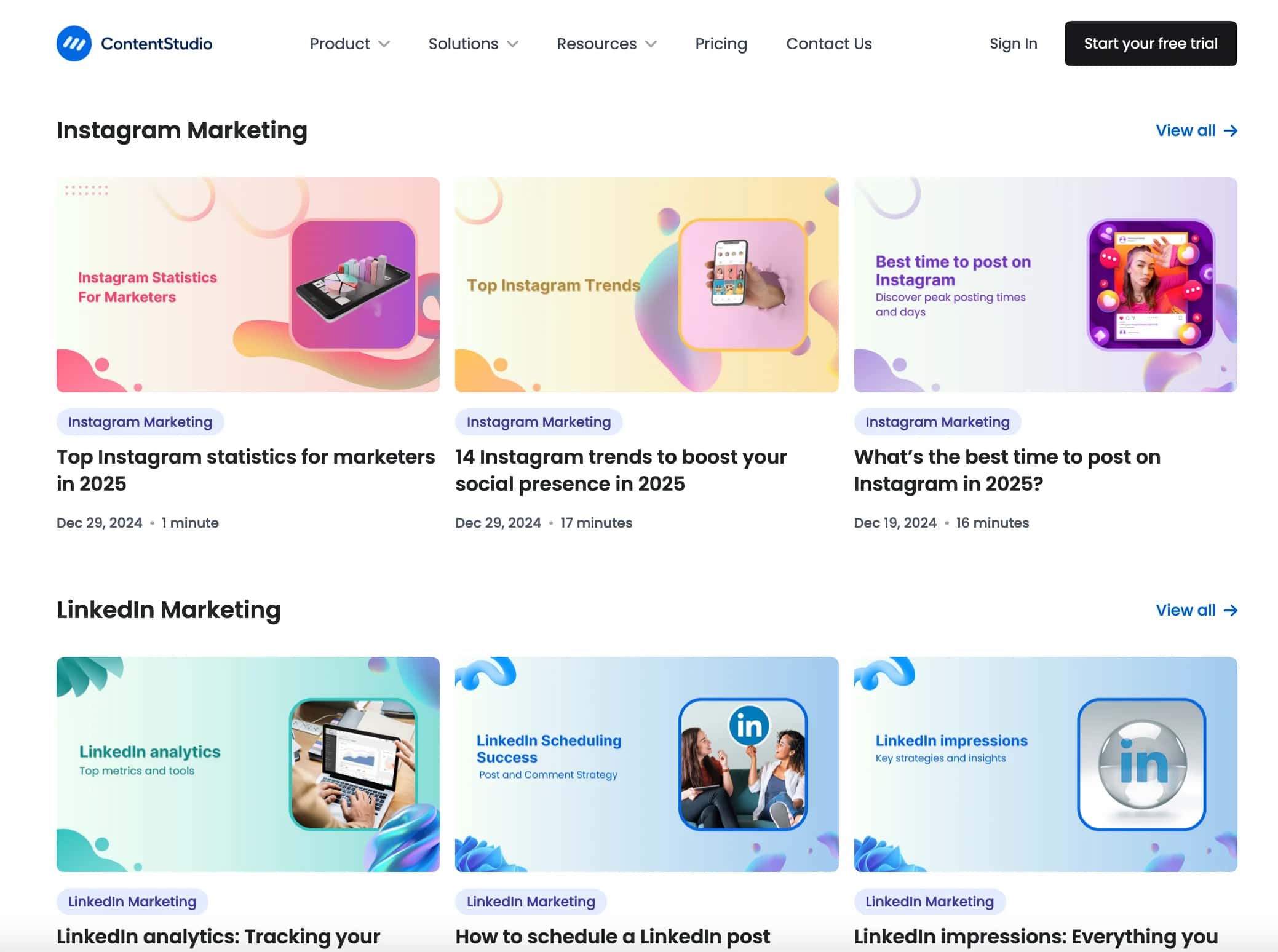
If you scroll through the ContentStudio blog feed, you’ll notice that most content stays close to social media marketing.
The blog targets social media managers, social media influencers, bloggers, agencies, and businesses, anyone who wants to grow on social media. That clarity shapes keyword choices, topics, and examples.
Step #2: Choose your online marketing arsenal
Next, decide which tools will support your SaaS SEO strategy.
SEO is far more than guesswork. You’ll need a small stack of tools for research, writing, design, and analysis. Most SaaS teams are already comfortable paying for good tools, so treat this as an investment, not just a cost.
Here are some core categories to consider:
- Keyword research tools:
Ahrefs and Semrush are go-to suites for serious SEO work. For budget options, look at LowFruits, Keyword Chef, or an AI SEO tool for keyword discovery and content ideas. - Social media management dashboard:
To support SEO with consistent social distribution, you need a scheduling system. Try ContentStudio to plan, schedule, and distribute social content across channels. - Writing and grammar checker:
Tools like Grammarly, Quillbot, and Jasper can help polish drafts and support your content writing plans. - Online graphic design tools:
Use Canva or Crello to create social visuals and blog graphics. Well-designed images improve engagement and time on page. - Video editors and content tools:
If you aren’t investing in video, you’re missing engagement opportunities. Tools like Veed.io, Offeo, or Filmora make video editing and content creation more accessible.
These aren’t the only options. You can ask for recommendations on communities like Reddit, Quora, X (Twitter), or LinkedIn to see what your peers use.
The key idea: you need a practical toolkit in place so you can move quickly when planning and executing your SaaS SEO work.o have some tools in hand to start working on your SaaS SEO.
Example: Resources Page
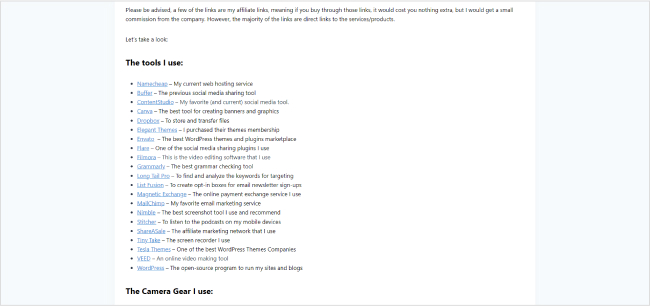
I created a resources page on my blog years ago that lists all the tools I regularly use. It still helps readers today.
I later updated some links to affiliate links (and disclosed that clearly at the top). The goal was twofold:
- Give readers a single page to see my “stack”
- Have a simple URL to share whenever someone asks for tool suggestions
You can replicate this for your SaaS, both as a user resource and a small, passive lead generator.
Step #3: Pick the relevant keywords to target

Once you know your audience and tools, it’s time for keyword research.
This step can make or break your SaaS SEO results.
You want to:
- Target keywords that match your product and audience
- Avoid jumping straight into high-competition, broad keywords
- Look for “underserved” topics where existing content is weak or outdated
Many beginners get blinded by large search volumes. They think, “If 10,000 people search this each month, we just need a small slice.” In reality, those terms are usually dominated by massive, high-authority sites.
Instead, focus on:
- Highly relevant, niche keywords
- Long-tail phrases that show strong intent
- Questions your audience actually asks your team
Low-competition, relevant keywords are often longer but much more realistic for newer SaaS sites.
Example: Parrots-related blog
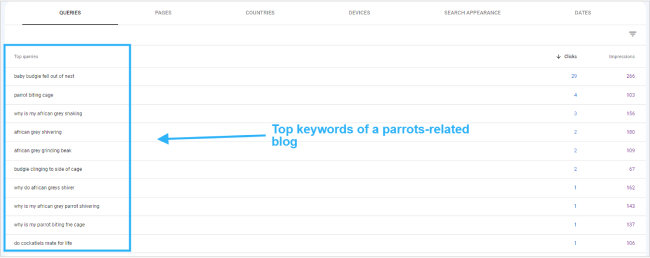
I once launched an experimental content site about parrots. It picked up traffic quickly because I only targeted very specific, relevant keywords that bigger sites had ignored.
That experience is a good reminder of what happens when you choose the right keywords and consistently create content around them.
Step #4: Publish authoritative content

One of the key factors in successful SaaS SEO is consistently publishing authoritative, high-quality content.
Some brands chase “topical authority” by publishing at scale. Volume helps, but only if the content is genuinely useful. Blind “bulk” posting rarely moves the needle.
Bulk publishing on relevant topics works when:
- The content answers real questions
- You cover topics in more depth than competitors
- Your pages are clearly connected through internal links
SaaS businesses should focus on the areas where prospects struggle most—for example, handling SaaS subscription billing or automating renewals. Start with topics that have demand but weak content from competitors.
SEO and content quality go together. The better your content, the more likely it is to rank, earn links, and convert.
Any SaaS company that wants to appear high in search engine rankings should double down on content that:
- Shows expertise in the niche
- Explains concepts clearly with real examples
- Gently ties problems back to product features
For most teams, your SaaS blog for SEO becomes the center of this strategy. It’s where you publish top-of-funnel guides, playbooks, and industry content that later nudges readers toward product pages.
Example: Clockify Blog
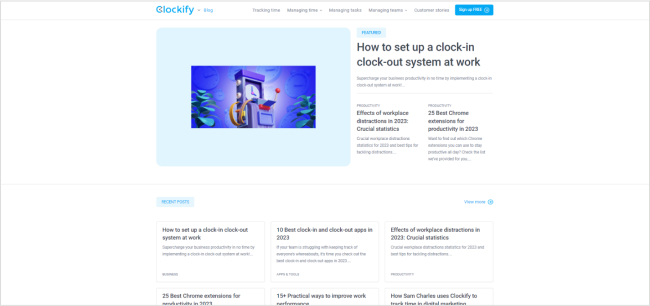
Clockify, a time-tracking tool, publishes detailed, well-researched posts about productivity, time tracking, and management.
They create engaging content that does two jobs:
- Educates readers on challenges around time and productivity
- Introduces Clockify as the natural answer to those challenges
That’s effective SaaS SEO in action.
Step #5: Build E.E.A.T for your SaaS business
E.E.A.T stands for Experience, Expertise, Authoritativeness, and Trustworthiness. It comes from Google’s quality rater guidelines and heavily influences rankings, especially in competitive or sensitive niches.
To build E.E.A.T for your SaaS:
- Show real experience (case studies, founder stories, behind-the-scenes content)
- Prove expertise (author bios, speaking, contributions to authority sites)
- Grow authority (mentions and features on trusted websites)
- Strengthen trust (clear pricing, transparent policies, strong UX, reviews)
Many brands focus heavily on social media, answering questions, sharing customer stories, and engaging more visibly than competitors. Others host webinars, workshops, or online events to connect with users.
E.E.A.T isn’t a simple checklist; it’s the combined effect of many small actions over time.
Influencers often:
- Engage audiences on social platforms
- Guest post on industry blogs
- Join podcasts and panels
All of this helps reach new audiences and sends strong E.E.A.T signals back to Google
Example: Jared Bauman
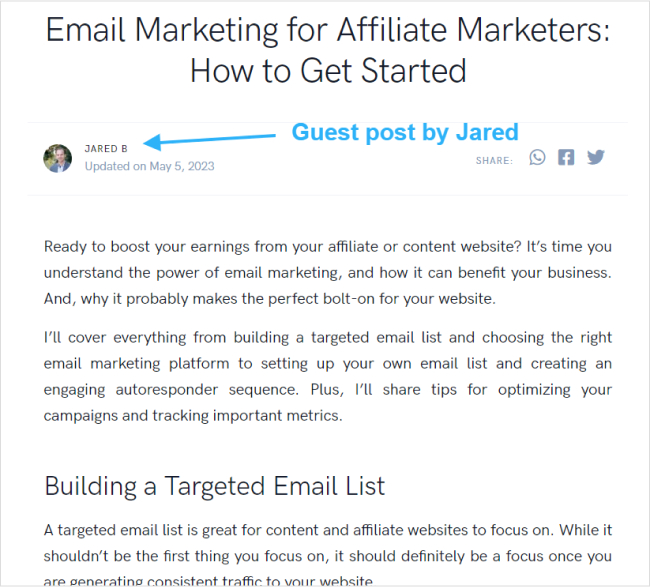
Jared Bauman, CEO of 201 Creative and host of the Niche Pursuits podcast, often talks about E.E.A.T.
I discovered him through a guest post on a marketing blog. He writes across multiple sites, appears on various podcasts, and generously shares his knowledge.
This kind of activity:
- Builds his personal brand
- Gains mentions and backlinks for his agency
- Supplements his podcast presence
All of which contributes to stronger E.E.A.T in the eyes of search engines.
Step #6: Pay attention to both on-page and off-page SEO
One of the most overlooked aspects of a SaaS SEO strategy is balancing on-page and off-page work.
Many founders and CTOs know these terms vaguely, but not in practice:
- On-page SEO refers to improvements you make on your own site: titles, headings, copy, internal links, page speed, schema, and web design.
- Off-page SEO covers everything that happens elsewhere: backlinks, unlinked mentions, social brand mentions, guest posts, directories, podcasts, and more.
To get started, you can:
- Tune your pages for the right keywords and search intent
- Create logical internal links between related pages
- Improve loading speed and mobile experience
- Maintain clear, fast navigation
On the off-page side, focus on:
- Earning mentions and links from relevant blogs and media
- Participating in industry communities and roundups
- Guest posting on sites your audience already trusts
Link building for B2B SaaS is often central to off-page SEO and a key driver of organic growth.
Most startups and SaaS companies build a small team of SEO specialists and writers who:
Talk about the brand on social media and podcasts
Publish high-quality content
Build backlinks
Write and pitch guest posts
Example: Streamyard
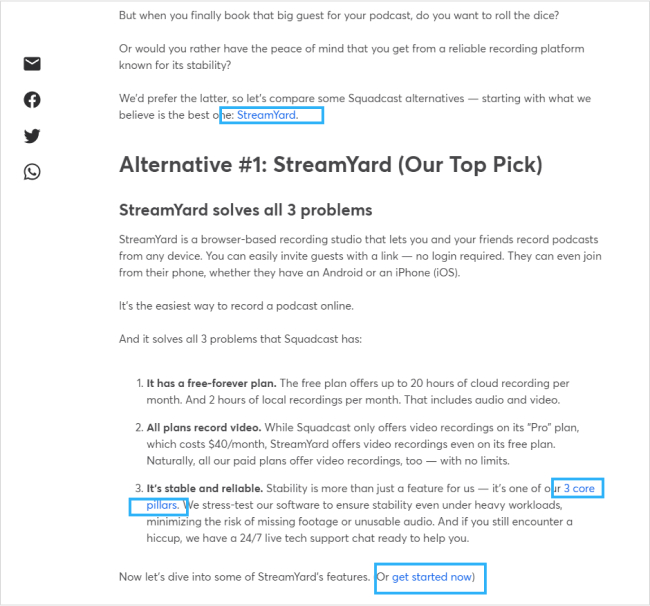
The team at StreamYard understands SEO well. In their blog posts, they consistently add internal links to related content and core product pages.
This internal linking:
- Helps readers discover more content
- Passes authority between pages
- Signals topical depth to search engines
Aligning your SaaS SEO strategy with the marketing funnel
To get the most from SaaS SEO, your content must support the full marketing funnel: awareness, consideration, and decision.
Top-of-the-funnel (ToFu): awareness
At this stage, people are aware of a problem but may not know tools like yours exist.
- Intent: Informational (“what is…”, “how to…”)
- Examples: “how to plan social media content,” “what is social media engagement.”
- Content:
- In-depth blog posts and guides
- Checklists and templates
- Educational videos and webinars
Your goal here is to educate and build trust, not sell hard. These pieces often live on your SaaS blog for SEO and become entry points into your brand.
Middle-of-the-funnel (MoFu): consideration
Now prospects know they need a tool and are comparing options.
- Intent: Commercial/investigational (“best…”, “alternatives to…”)
- Examples: “best social media management tool for agencies,” “ContentStudio alternatives.”
- Content:
- Case studies and customer stories
- Industry or role-specific solution pages
- Comparison pages (“X vs Y”)
Here, your task is to demonstrate why your product is a better fit for specific use cases.
Bottom-of-the-funnel (BoFu): decision
These users are close to making a purchase and need final reassurance.
- Intent: Transactional (“pricing,” “demo,” “trial”)
- Examples: “[Your brand] pricing,” “[Your brand] demo,” “[Your brand] integration with HubSpot”
- Content:
- Product and pricing pages
- FAQ pages
- Landing pages for trials and demos
A smart SaaS SEO strategy connects these stages with internal links. For example:
- A ToFu guide links to a MoFu comparison article
- That comparison article links to a BoFu pricing or trial page
This lets visitors progress through the funnel at their own pace.
How to measure and improve your SaaS SEO over time
SaaS SEO is not a one-time project. You need ongoing measurement and iteration.
Define goals and KPIs
Connect your SEO efforts to business outcomes. Common goals include:
- Increasing qualified organic traffic
- Growing free trial sign-ups or demo requests from search
- Lowering paid CAC by shifting more acquisitions to organic
Track KPIs such as:
- Organic sessions and users
- Organic sign-ups and demos
- Keyword rankings for core terms
- Organic conversion rate
- Organic-assisted revenue (where SEO helped influence the deal)
Watch what competitors are doing
Use your SEO tools to:
- Identify competitors that rank for the keywords you want
- Study their top pages and content formats
- Find keyword gaps, terms they rank for that you don’t
- Find backlink gaps, sites that link to them but not you
This helps you spot topics and link prospects you may have overlooked.
Refresh and expand existing content
Some of your best SEO wins will come from updating what you already have:
- Refresh stats, screenshots, and examples
- Improve headings and structure
- Add internal links to new, relevant pages
- Expand thin sections with practical detail
A small refresh can bring a slipping article back to the first page, which often outperforms publishing a brand-new piece.
There’s no shortage of SaaS SEO advice out there. But a few practical tips keep popping up in successful programs.
Here are five that matter.
i. Publish high-quality, linkable blog content
Publish high-quality content” gets repeated so often it can sound empty—but it still matters.
High-quality content:
- Solves a real, specific problem
- Is clear, structured, and easy to scan
- Includes examples, screenshots, or templates
- Leaves the reader feeling, “That helped.”
Truly helpful content tends to become linkable content; other blogs, newsletters, and creators naturally reference it.
Over time, this kind of content:
- Builds authority for your domain
- Supports rankings for harder keywords
- Feeds your sales funnel with better-educated prospects
Social media content calendar
Stay consistent and organized with ContentStudio’s social media content calendar for marketers and agencies.
Social Media Content Calendar
Stay consistent and organized with Contentstudio’s social media content calendar for marketers and agencies.
Get Started for FREE
ii. Use video platforms to engage your audience

The video has become a vital tool in modern-day SEO games. The reason is tVideo has become a powerful ally for SaaS SEO.
Google frequently shows YouTube videos in search results, and strong social engagement supports your E.E.A.T signals.
Platforms to consider:
- YouTube
- TikTok
- Instagram Reels
- LinkedIn video
- Short clips on X (Twitter)
You can add links in places like:
- YouTube descriptions
- Instagram and TikTok bios
- Twitter and LinkedIn bios
- Snapchat/Instagram stories
- Your LinkedIn profile
- Facebook page or profile
Don’t chase social links for their SEO value alone. Focus on using video to:
- Build brand familiarity
- Explain concepts that are complex in the text
- Move people toward your core site and offers
iii. Capitalize on influencer marketing opportunities
Influencer marketing remains one of the more cost-effective channels for SaaS brands to reach highly targeted audiences.
From an SEO perspective, influencer work can:
- Earn you backlinks from blogs and authority sites
- Send qualified referral traffic
- Increase branded search demand (people looking for you by name)
SaaS companies often:
- Sponsor content on influencer YouTube channels or blogs
- Arrange co-marketing webinars
- Run joint campaigns on Instagram or LinkedIn
The key benefit: followers already trust these creators. When influencers recommend or review your tool, their audience is more likely to click, sign up, and share.
iv. Incentivize bloggers to review your product

Modern SEO is multi-dimensional. Google uses many signals, content quality, links, user behavior, brand mentions, and more.
One smart tactic for SaaS companies is to encourage bloggers and niche publishers to review your product.
You might:
- Offer a free extended trial
- Provide a free plan with premium features
- Pay for sponsored reviews (with clear disclosure)
When respected bloggers and site owners review your product:
- Their readers discover your brand in context
- Your product appears in more “best tools for X” lists
- You gain backlinks and brand signals that support rankings
Subscribers often trust their favorite blogs. A thoughtful review on the right site can pay off for years.
v. Launch an outreach campaign for niche edits

An outreach campaign means you dedicate a team or hire a link builder to do focused link outreach for you.
The idea is simple:
- Find relevant websites and articles
- Ask the site owners to add a link to your content
- Offer something in return (value, improved resource, or, in some cases, payment)
With niche edits, you’re not asking for a link in a future article. Instead, you:
- Find existing, already-ranked articles on relevant sites
- Suggest your content as an extra resource within those pieces
Success rates are always modest in outreach, even if you offer compensation (not a recommended long-term tactic).
Still, many companies use a mix of approaches, guest posts, digital PR, niche edits, and more, to grow a healthy backlink profile and reputation.
Conclusion
If a SaaS brand wants to grow organic traffic in 2025, SEO has to be part of the plan.
But there is no single blueprint that works for everyone. The SEO world moves quickly; a tactic that works brilliantly for one SaaS may flop for another.
That’s why understanding the principles of SaaS SEO matters more than copying tactics:
- Who is your audience?
- What are their problems and search habits?
- Which keywords map to each stage of your funnel?
- How can your content genuinely help them succeed?
Buying tools alone won’t give you an edge. They help only if you know how to use them effectively.
A strong SaaS SEO program keeps coming back to a few core themes:
- Building authority in your niche
- Creating and reinforcing brand awareness
- Understanding SEO fundamentals (on-page, off-page, technical)
- Publishing high-quality content consistently
- Engaging readers once they land on your site
- Owning a clear brand position in your category
- Bringing visitors from multiple channels, not just one
After more than a decade of watching SEO evolve, one lesson stands out: trust is the quiet engine behind long-term SEO success.
To earn trust, you must be honest and helpful. The more transparent you are about your expertise, process, and opinions, the more believable you become.
SaaS companies that invest in genuinely helpful content and back it up with a solid product experience set themselves up for long-term SEO gains.
FAQs
Let’s look at some common questions about SaaS SEO.
What is SaaS in digital marketing?
SaaS stands for software-as-a-service. It’s a business model where companies provide software over the internet, usually on a subscription basis.
These tools help businesses, entrepreneurs, and marketers solve specific problems without installing or maintaining software on their own servers.
For example, ContentStudio is a SaaS company that provides social media content scheduling and management software.
What is a SaaS strategy?
From a broad perspective, a SaaS strategy is how a software-as-a-service company approaches its business, mission, and goals.
A mature SaaS business usually has strategies for each department—for example:
- A SaaS SEO strategy for organic growth
- A SaaS social media marketing strategy
- A product roadmap strategy
- A customer success strategy
Each one supports the others.
How can I optimize my SaaS website for SEO?
SEO is more than sprinkling keywords on a page. Website SEO improvement depends on many factors working together.
Some practical first steps:
- Improve page loading speed on desktop and mobile
- Use a professional or custom theme with clean code
- Write clear, concise copy that speaks to your audience
- Map each page to a specific intent or keyword cluster
- Publish supporting blog content that answers related questions
- Strengthen internal linking between related pages and posts
From there, you can go deeper into technical fixes, structured data, and systematic link building as your SaaS SEO program matures.
How long does it take to see results from SaaS SEO?
SaaS SEO is a long-term investment. Most companies start seeing meaningful organic traffic growth within 3 to 6 months of consistent effort.
However, competitive keywords and high-value pages may take 9 to 12 months or longer to rank well. The timeline depends on your domain authority, content quality, backlink profile, and the competitiveness of your niche.
Early wins often come from long-tail keywords and informational content that targets lower-competition search terms.
What are the most important SEO metrics for SaaS companies?
SaaS companies should track metrics that tie directly to business outcomes, not just vanity numbers.
Focus on these key indicators:
- Organic traffic growth from target keywords
- Conversion rate from organic visitors to trial signups or demos
- Keyword rankings for high-intent search terms
- Backlink quality and growth over time
- Pages per session and average session duration
- Customer acquisition cost from organic channels
These metrics help you understand whether your SEO efforts are driving real business value.
Recommended for you
6 proven ways to build backlinks with content marketing for SEO









Powerful social media management software
7-day free trial - No credit card required.