Bulk-generate & schedule posts in seconds with Smart Scheduling. Try now!
Omnichannel marketing in 2026: Complete strategy & benefits
 Published by Saif Ali
Digital marketing changes fast, making it hard for brands and agencies that don’t track the latest marketing trends. In 2026, customers move between apps, websites, stores, and social feeds in seconds, so your message has to move with them.
Attention spans keep shrinking as people scroll through an endless stream of content on multiple social channels. If your brand shows up with disconnected messages, slow follow‑ups, or clunky handoffs between teams, prospects will move on.
That’s where a strong, unified digital marketing strategy built on omni-channel marketing comes in. Instead of thinking in silos, email vs. social vs. website, you design a connected system that uses your main content pillars across every touchpoint in a consistent way.
This guide covers what omni-channel marketing is, how it works in 2026, the four pillars of omni-channel marketing, how to build an omni-channel marketing strategy, and how to handle omni-channel content creation with modern tools like ContentStudio.
What is omni-channel in marketing?
Omnichannel marketing is an integrated, customer-first approach in which all brand channels connect seamlessly. It replaces separate campaigns with a cohesive brand experience.
A prospect might see an Instagram ad, join your email list, browse your site, start a chat, and buy in-store, with full context followed.
Data from browsing, email, app use, and purchases feeds into one customer view, with consistent messaging and identity across all touchpoints.
This approach is widely used in commerce, retail, and B2B SaaS to create seamless experiences that blend physical and digital interactions.
A customer might research on mobile, book a demo from their laptop, then meet a sales rep in person, all within one continuous journey.
Successful brands focus on key touchpoints, including mobile apps, websites, social media, physical locations, and communication channels such as email, SMS, and chat.
When executed well, omnichannel marketing enhances customer experience and strengthens brand positioning.
A solid strategy is vital for finding, engaging, and retaining the right audience across all touchpoints.
The easiest way to manage and grow your social channels.
Try ContentStudio for FREE
What is omni-channel marketing?
Omni-channel marketing is a customer-centric strategy that uses all relevant channels, online and offline, to deliver a unified and consistent brand experience.
It goes beyond simply being present on many platforms.
Instead, it connects them so that customers can move between:
- Physical stores and branches
- Mobile apps
- Websites and landing pages
- Social media profiles
- Email and messaging channels
…without feeling like they are starting over each time.
The main goals of omni-channel marketing are to:
- Make it easy for customers to interact with your brand wherever they are
- Keep branding, offers, and tone aligned across channels
- Use data from each touchpoint to personalize the next interaction
- Design a connected customer path, from discovery to purchase and beyond
This approach is especially effective in 2025, as phygital experiences (physical + digital) are becoming the norm.
Think of click‑and‑collect orders, in‑store QR codes, or mobile apps that support in‑person visits.
Example: Standard Chartered
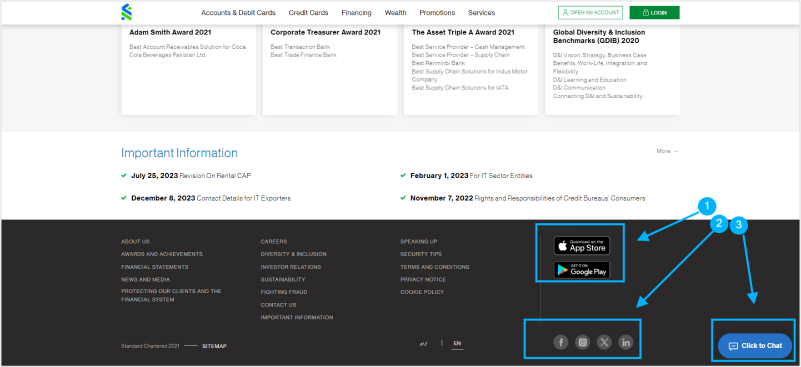
Standard Chartered is a British multinational banking institution operating in over 60 countries and territories worldwide.
The bank has a strong omnichannel marketing strategy. It uses social media, mobile apps, and live chat to engage prospects and assist customers.
People can sign up for an account on the website, manage their finances through the app, and get support via chat or in-branch.
Standard Chartered delivers a consistent experience across all these touchpoints. That consistency in messaging, visual identity, and support is a hallmark of effective omni-channel marketing.
Multichannel vs. omnichannel marketing
Many brands already use multiple channels, but that doesn’t always mean they are practicing omni-channel marketing.
Understanding the difference helps you design better campaigns and avoid fragmented experiences.
Omni-channel marketing
Omni-channel marketing ensures a smooth and consistent customer journey across different platforms. A well-designed omni-channel marketing strategy:
Creates engaging marketing campaigns based on customer interests and behavior
- Makes the shopping or buying process easier for customers
- Emphasizes a personalized customer experience
- Delivers a unified message to the customer base
- Focuses on building a consistent brand voice
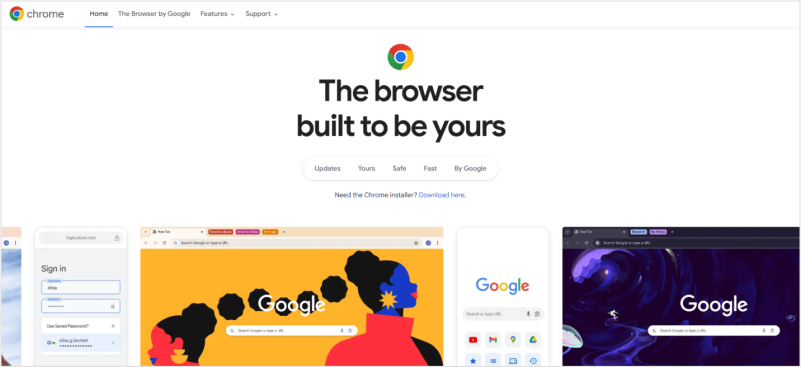
Example: Google Chrome
Multichannel marketing
Multichannel marketing means engaging customers across multiple direct and indirect channels, such as websites, email, physical stores, and ads. The focus is mostly on presence and reach.
Typical traits of multichannel marketing:
- Focuses on being active on as many channels as possible
- Prioritizes quantity of touchpoints over the connection between them
- Often sends non-personalized, broadcast-style messages
- Aims to reach the maximum number of people, even if experiences differ
Example: Subway
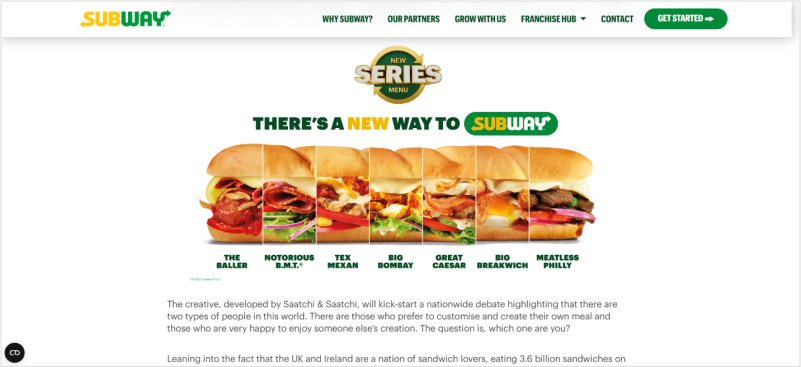
Subway launched a multichannel marketing campaign in the UK and Ireland in 2023 called “Two Ways to Subway.”
The campaign used many online and offline channels:
- TV commercials
- Online paid ads
- Radio advertising
- Video on demand
- Outdoor advertising
- Social media
- Influencer marketing
It reached an estimated 96% of 18–44-year-olds through TV, VOD, and radio. This is classic multichannel: wide reach across many platforms, but not necessarily a single, integrated experience for each customer.
Simplified social media marketing for individuals & agencies.
Try ContentStudio for FREE
Why omni-channel marketing matters in 2026
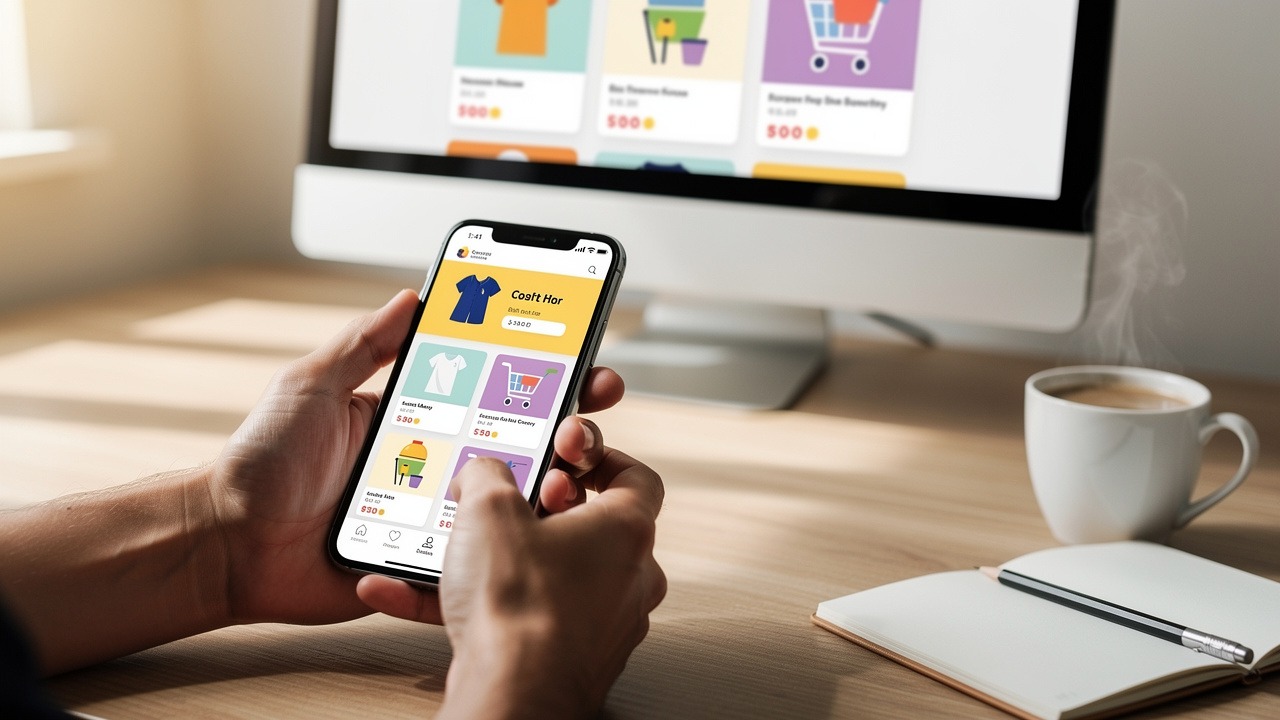
By 2026, omni-channel marketing is no longer a “nice to have” for brands targeting serious growth; it is a baseline expectation from customers.
A few trends behind this shift:
- Cross-device behavior is the norm. People start research on mobile, compare options on desktop, ask questions via social DMs, and complete purchases in-store or in an app. If those steps aren’t connected, you lose context and trust.
- First-party data is more important. With privacy regulations and third‑party cookie changes, brands increasingly rely on the data they collect directly through their own channels. Omnichannel marketing provides the structure to do this responsibly and effectively.
- Phygital experiences are standard. From buy‑online‑pick‑up‑in‑store (BOPIS) to in‑store QR codes and digital receipts, customers expect online and offline to work as one.
- High-value customers use more channels. Research consistently shows that customers who engage across multiple touchpoints buy more often and have higher lifetime value.
For B2B SaaS, agencies, and e-commerce brands, this means you can’t just run separate email, social, and paid programs.
You need a connected omni-channel marketing strategy that ties campaigns, content, and data together, and you need tools that make that realistic for your team.
What are the 4 pillars of omni-channel marketing?
To explain omni-channel marketing clearly, it helps to break it into four main pillars. If you’re wondering “what are the 4 pillars of omni-channel?” these are the building blocks most brands rely on:
- Optimization and continuous improvement
- Visibility
- Measurement
- Personalization
i. Visibility
Visibility is about knowing exactly who you want to reach and where they spend their time. Without a clear audience, omnichannel marketing becomes a random activity.
Understanding your audience powers effective social media engagement and channel selection. Brands and organizations should define:
- Core buyer personas and segments
- Where each persona spends time (channels, communities, devices)
- What content and offers matter to them at each stage of the funnel
For instance, a graphic designer specializing in logo design should focus on brands with outdated logos and pitch redesigns, rather than trying to sell to newly launched companies that have just completed branding.
Creating a complete view of your customer persona is a fundamental of any omnichannel marketing strategy.
ii. Measurement

Omni-channel marketing uses multiple channels at once, so you need to see the impact of each one, individually and together.
Key questions:
- Which channels influence first touch, consideration, and conversion?
- How do email, paid social, organic content, and in‑product touchpoints support each other?
- Where do customers drop off along the way?
The key to meaningful measurement is understanding how each channel contributes to the campaign, whether it’s email, social, or content. Tracking performance helps you decide what to keep, pause, or scale.
Successful brands and influencers keep a close eye on every marketing strategy, including:
- Budget allocation
- ROI
- Profitability
- Long-term retention and engagement
Social Media Analytics
Fine-tune your social media strategy for success with in-depth analytics and white-labeled reports.
Get Started for FREE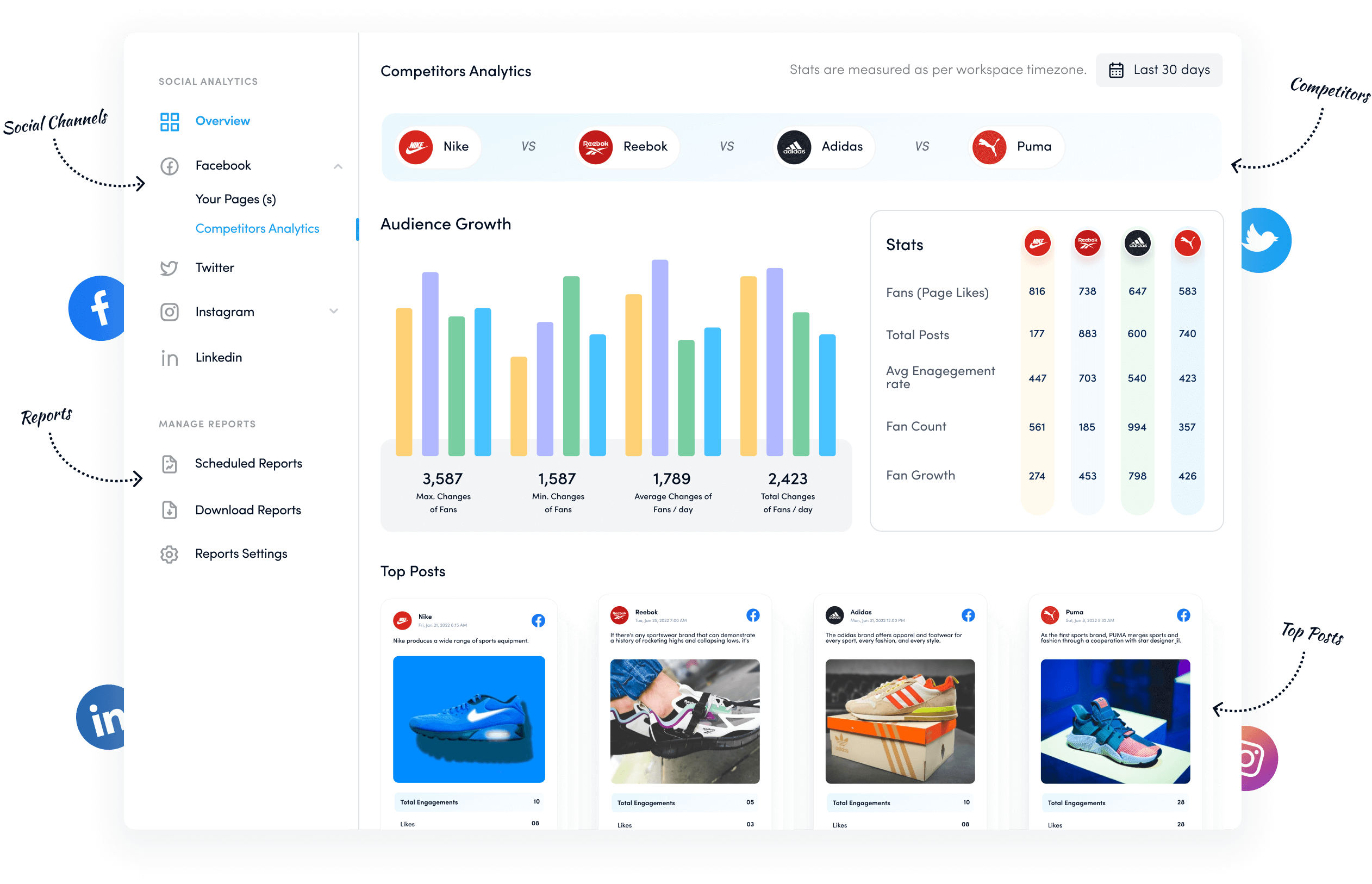
iii. Personalization
As attention spans drop, generic messages lose their impact. One-size-fits-all campaigns rarely cut through the noise in a busy feed or inbox.
Personalization helps you stand out. Visibility and measurement tell you who you are talking to and how they behave. Personalization turns that insight into customized messages, offers, and experiences.
Examples of omni-channel personalization:
- Email subject lines that use a person’s first name and reference past behavior
- Product recommendations on your site that reflect what a user viewed last week
- Retargeting ads that match a user’s current stage in the buying process
- In-app messages that align with email sequences and sales outreach
Once a brand has enough customer data, names, behavior, purchase history, and content preferences, it becomes much easier to create targeted offers that resonate with specific segments.
iv. Optimization and continuous improvement
Once you have a plan, you run it, gather data, and analyze the results. Then comes the real advantage of omni-channel marketing: you can improve every part of the system based on what you learn.
Optimization in omni-channel marketing includes:
- Testing different channel mixes, sequences, and cadences
- Refining creative, offers, and messaging for each audience
- Improving handoffs between marketing, sales, and customer success
- Aligning budget with the best-performing touchpoints
Whether you’re running a Facebook ad campaign, sending email newsletters, or building in‑app onboarding flows, you can keep testing and tweaking your strategy to increase impact over time.
These four pillars, visibility, measurement, personalization, and continuous improvement, sit at the center of every strong omni-channel marketing campaign.
Benefits of omnichannel marketing
Omnichannel marketing is about combining forces across channels to deliver a clear, consistent message. Before you invest heavily, it helps to understand the upside.
i. Easier customer engagement
Customer engagement sits at the heart of sales and marketing. Omnichannel marketing enables smooth interactions across channels, so you can meet customers where they are and keep them engaged.
Benefits include:
- Faster responses across social, email, chat, and in‑app messaging
- More relevant follow-ups based on previous behavior
- Fewer “dead ends” where customers feel stuck or ignored
The result: brands, influencers, and entrepreneurs can communicate, engage, and convert their audiences more effectively.
Social Customer Service
Never miss a message or comment from your social media audience. Try ContentStudio’s Inbox.
Get Started for FREE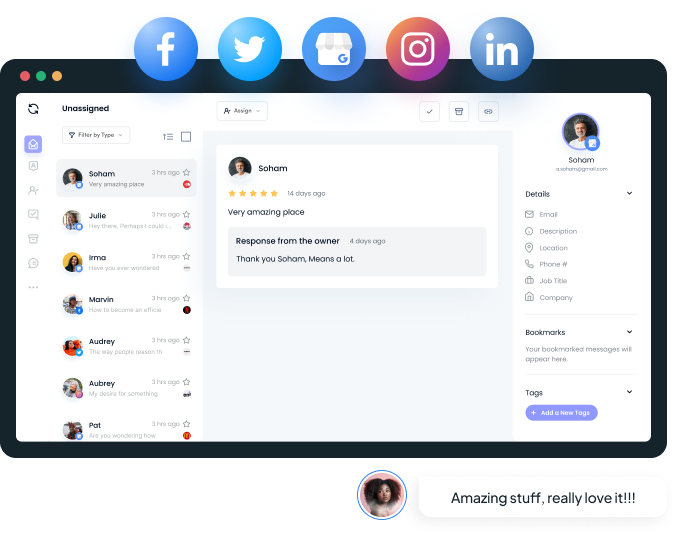
ii. Consistent brand messaging
Brands work hard to build values, culture, and standards. One big advantage of omni-channel marketing is that it supports consistent messaging across every touchpoint.
When your social content, email flows, ads, and offline materials all tell the same story, you:
- Become easier to recognize
- Build familiarity and trust among customers
- Reduce confusion in the buying process
Omnichannel marketing helps brands and agencies keep their message aligned across platforms, strengthening positioning over time.
iii. Better customer insights
Because omni-channel marketing sends a unified message across channels, it also improves how you gather and interpret customer insights.
With an omni-channel setup, you can see:
- How people move from first touch to purchase
- Which content formats and topics do they engage with the most
- How online behavior connects to offline actions
Omni-channel marketing gives you a more complete view of customer preferences and behavior. That insight makes it easier to refine campaigns, update offers, and improve the overall experience.
iv. Higher customer retention
Customer retention is one of the biggest drivers of long-term success. The higher your retention, the more profitable your customer base becomes over time.
Omni-channel marketing supports retention by:
- Keeping communication consistent across support, sales, and marketing
- Delivering personalized follow-ups and loyalty offers
- Making it simple for customers to return, reorder, or upgrade
When customers feel understood and supported at every step, loyalty and lifetime value rise.
v. Smooth customer journey
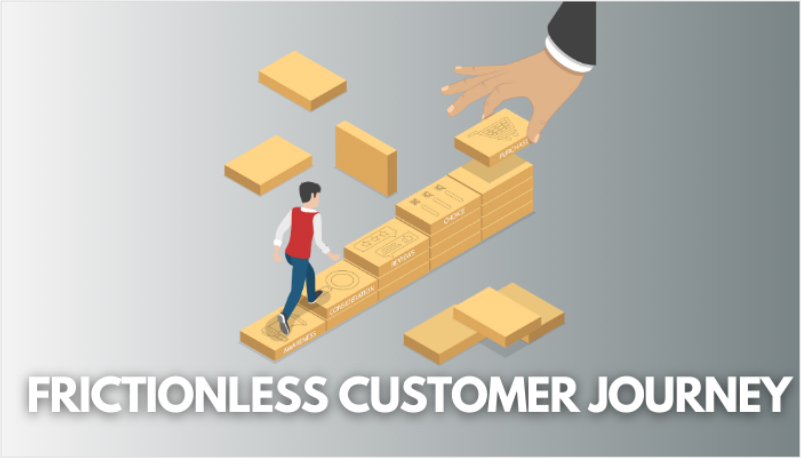
Research on predicting customer loyalty in omni-channel environments shows that a key benefit of omni-channel marketing is a smoother customer journey, from discovery to purchase and beyond.
Customers can:
- Move between devices without losing progress
- Switch from online research to in‑person interactions easily
- Get relevant information at each stage without repeating it
This reduced friction leads to higher conversions, better reviews, and more referrals.
How to design a successful omnichannel marketing strategy
Designing a strong omnichannel marketing strategy takes planning and coordination, but it doesn’t have to be overwhelming. Here are the core steps.
i. Identify your customers’ touchpoints
The first step in any omni-channel marketing strategy is understanding customer touchpoints, all the places where customers interact with your brand.
A touchpoint might be anomnichannel marketing strategy is understanding customer touchpoints, every place, email newsletter, a mobile app or push notification, a website or landing page, a sales call or live demo, or even a physical product label or signage with QR codes.
Run an audit to map these touchpoints across the full funnel, from first impression to repeat purchase and advocacy.
Once touchpoints such as weekly newsletters, mobile push notifications, or in‑app banners are identified, it becomes easier to improve them.
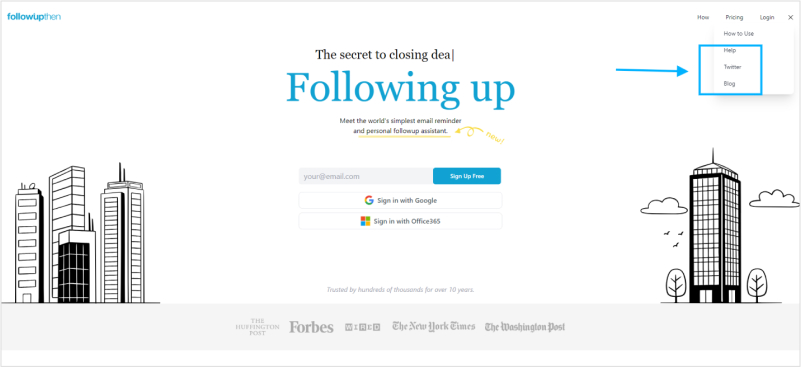
FollowUpThen is an email reminder tool that helps brands and individuals reach out to prospects at the right time.
They understand their key touchpoints (email and inbox reminders) and focus on making them effective rather than spreading themselves too thin.
ii. Map customer journey
Once you’ve identified touchpoints, map the customer path across them.
Most paths include stages such as awareness, consideration, decision or purchase, onboarding, retention, and advocacy. Each stage may include multiple online and offline interactions.
Mapping helps you spot gaps where customers drop off, channels that work well together, and moments where better content or offers could move people forward.
Remember, with omnichannel marketing, you often manage several paths for different personas at once. Keeping them integrated and up to date in real time reduces inconsistencies and errors.
In simple terms, mapping the customer path means designing how someone moves from discovery to becoming an advocate, and then refining that path to improve the experience.
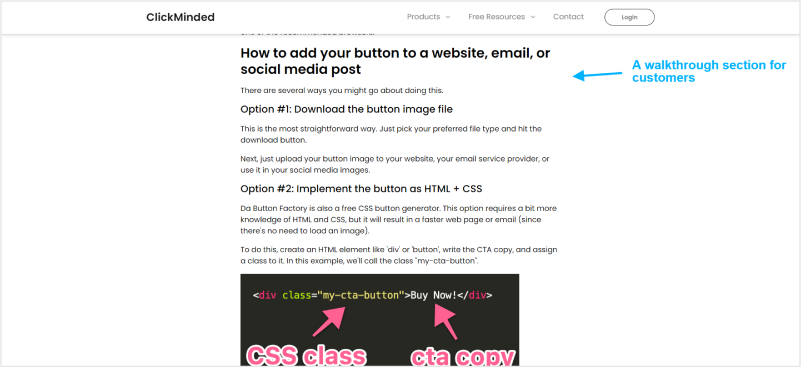
ClickMinded is an online tool that lets website owners create customizable CTA buttons.
Their homepage walks through the full process of using the tool, effectively mapping a customer path from first visit to activation.
iii. Add personalization
Personalization is one of the strongest levers in any omni-channel marketing strategy.
It means adapting experiences, products, or services to real customer needs—especially when customers are willing to share data in exchange for more relevant communication.
Strong personalization requires clean, connected data across systems, clear segmentation rules based on behavior and attributes, and content and offers that match each segment’s priorities.
Use the data you collect to design personalized paths that still align with your brand mission. This approach gives customers faster access to what matters most to them and makes every interaction count.
Omni-channel marketing helps you create more positive interactions, discover friction points, and improve overall satisfaction.
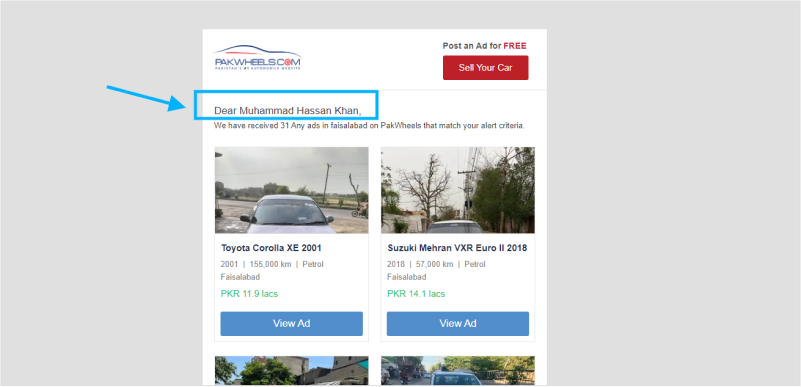
Pakwheels, Pakistan’s leading automobile classified ads site, highlights the power of personalization in email.
They use the subscriber’s full name and adapt content based on interests, which sparks attention and encourages clicks.
iv. Implement channels integration
An omni-channel marketing strategy depends on strong integration between online and offline touchpoints. If channels don’t work together, the experience breaks down.
Your goal is to ensure that the user experience remains consistent whether a customer is browsing the online store, visiting a physical location, using a mobile app, or speaking with sales or support.
This requires integrated tools, aligned teams, and clear internal processes.
ContentStudio is an all-in-one AI-powered content creation and social media management tool that helps marketers, brands, bloggers, and entrepreneurs create, manage, and analyze social media publishing.
It can also generate images using its recently launched AI studio feature. It connects with several major networks to make this SaaS product more effective and credible for omnichannel campaigns.
v. Measure campaign performance
Because omni-channel marketing uses multiple channels to deliver a consistent message and a strong experience, you need a reliable way to measure performance.
Choose analytics tools that provide cross-channel views rather than isolated dashboards.
Track metrics across the entire funnel rather than focusing solely on last-click conversions, and review performance regularly while sharing insights across teams.
Your omni-channel marketing strategy should help your brand grow, improve ROI, and move your company in a clearly positive direction.
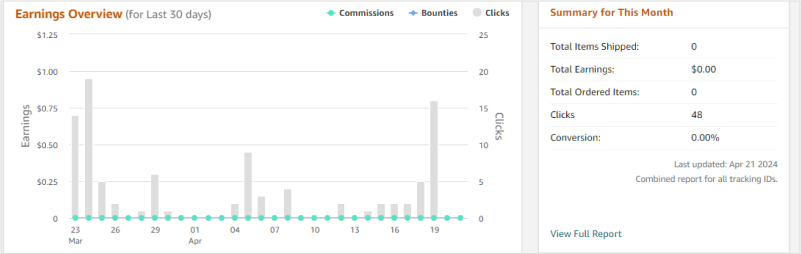
Amazon Associates provides clear analytics to affiliates who promote Amazon products and earn commissions.
These reports help affiliates understand which content, channels, and audiences perform best, exactly the kind of feedback loop you need in omni-channel marketing.
Top 5 tools for omni-channel marketing
Tools won’t build your omni-channel strategy for you, but the right stack makes execution far easier.
Here are five platforms that support omni-channel marketing in different ways.
1. ContentStudio
ContentStudio is an AI-driven platform dedicated to content creation and social media management, boasting a user base exceeding 160,000 individuals globally.
It provides a comprehensive social media management dashboard suitable for marketers, agencies, and influencers.
Users can plan and schedule content using its Publish feature, generate AI-crafted captions and images through the newly launched AI Studio, analyze key performance indicators (KPIs), and utilize numerous other valuable features.
ContentStudio: How it helps in omnichannel marketing
ContentStudio connects with multiple social media and publishing platforms so you can coordinate content publishing at scale.
It lets you post or schedule social content across major social networks and blogging platforms from a single workspace.
Since you can publish content to several platforms at once and tailor messages to each channel, it helps marketers and brands reach prospects and customers on their preferred platforms.
This supports omni-channel marketing efforts by keeping social content consistent, scheduled, and aligned with your broader campaigns.
2. Mailchimp
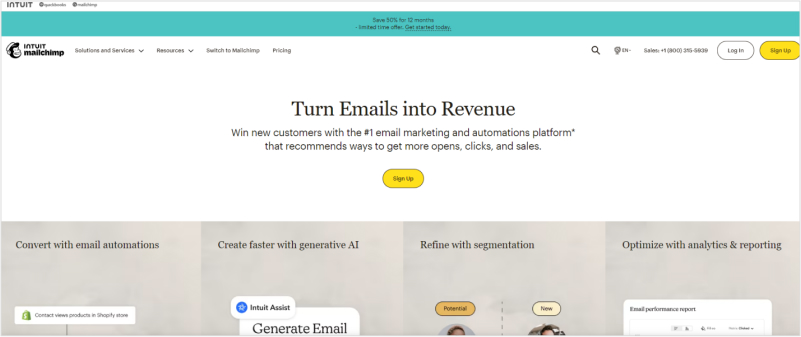
Mailchimp is a widely used email marketing platform that serves beginners and advanced users across many industries.
It also connects with various marketing and e-commerce tools to extend your campaigns beyond the inbox.
Key features include email templates and builder, campaign management, A/B testing and analysis, behavioral targeting, segmentation, sign-up forms, AI-assisted marketing tools, and comprehensive reporting and analytics.
Mailchimp: How it helps in omnichannel marketing
Since email remains a core channel in omni-channel marketing, Mailchimp plays an important role.
It supports behavioral targeting to send messages based on user actions, automation to keep sequences running in sync with ads and website behavior, and segmentation to adapt communication per audience group.
All of this helps you keep email aligned with other channels inside your omnichannel marketing strategy.
3. Intercom
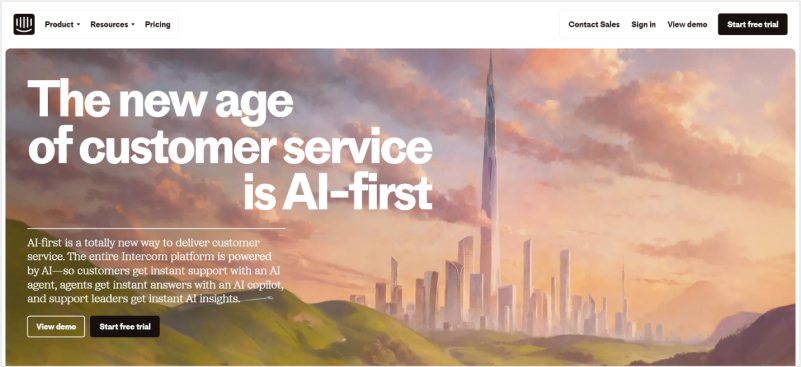
Intercom is an AI-powered chatbot and messaging system that helps companies build strong customer support experiences.
It offers a fully integrated support stack that enables brands to connect with customers wherever they are.
Key features include customizable chatbots, business messengers, live chat support, transactional messaging, and mobile integrations.
Intercom: How it helps in omnichannel marketing
Intercom has long been a leader in live chat and conversational support.
It helps brands engage website visitors in real time, surface offers and content based on behavior, and continue conversations from web to app or email seamlessly.
Because omni-channel marketing depends on consistent communication, a tool like Intercom is especially useful.
Live chat and chatbots help brands answer questions quickly and nurture prospects toward conversion.
4. Zendesk
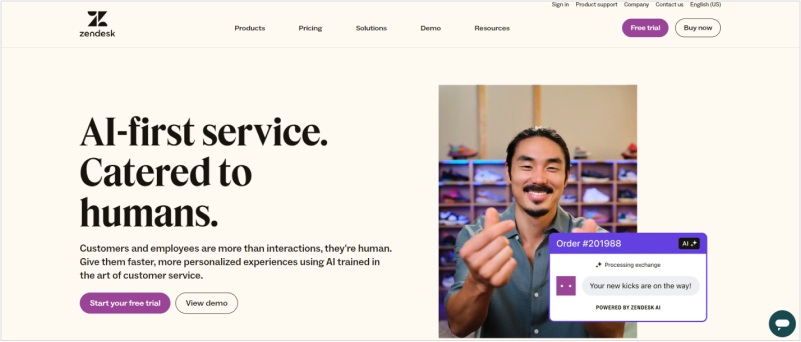
Zendesk is a powerful customer service tool that offers a full toolkit for managing customer care.
It includes live chat, a knowledge base, ticketing, and more to keep responses fast and consistent.
The platform provides live chat support and messaging, an AI-powered chat system, strong data privacy controls, a centralized agent workspace, and voice support services to streamline customer interactions across all channels.
Zendesk: How it helps in omnichannel marketing
Zendesk brings support channels together, email, chat, phone, and social, into one place.
This helps brands maintain consistent service levels across touchpoints, see full customer histories when handling issues, and align support messaging with marketing and sales.
All of this supports an omnichannel marketing strategy in which every interaction reflects the same brand promise.
5. Shopify
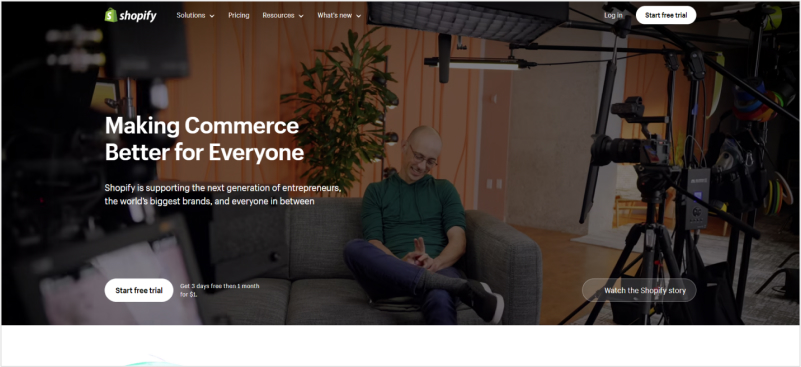
Shopify is a leading e-commerce platform that simplifies building and running online stores.
Sellers get an end-to-end setup that covers everything from launch to inventory management, payment processing, sales tracking, and analytics.
Key features include a drag-and-drop site builder with an easy-to-use interface, a large library of themes and apps, built-in CRM capabilities, flexible payment processing, and a fully hosted platform that handles all technical infrastructure.
Shopify: How it helps in omni-channel marketing
In omni-channel marketing, brands use websites, email, mobile apps, and social media to promote the same campaign.
Shopify provides the storefront that ties much of this activity together.
The platform provides a central hub for sending traffic from all channels, ensuring consistent product information and pricing across touchpoints.
It includes integrations with email, SMS, social, and ad platforms to streamline your marketing efforts.
Since you need a storefront to sell online, Shopify lets brands create and run stores without heavy custom development.
Let’s conclude
Omni-channel marketing is about improving your customers’ brand experience by connecting multiple platforms into one coherent system.
The campaign’s core values and promise remain consistent across every touchpoint, email, social, website, mobile app, or in‑store, while the exact format and creative can vary by channel.
By aligning channels, you reduce friction, improve conversion rates, and build long-term trust. That’s why more brands, influencers, and marketing teams are investing in omni-channel marketing in 2025.
You don’t need to do everything at once. Start by clarifying your audience and main touchpoints.
Experience organized workflow with a unified social media management platform for agencies.
Try ContentStudio for FREE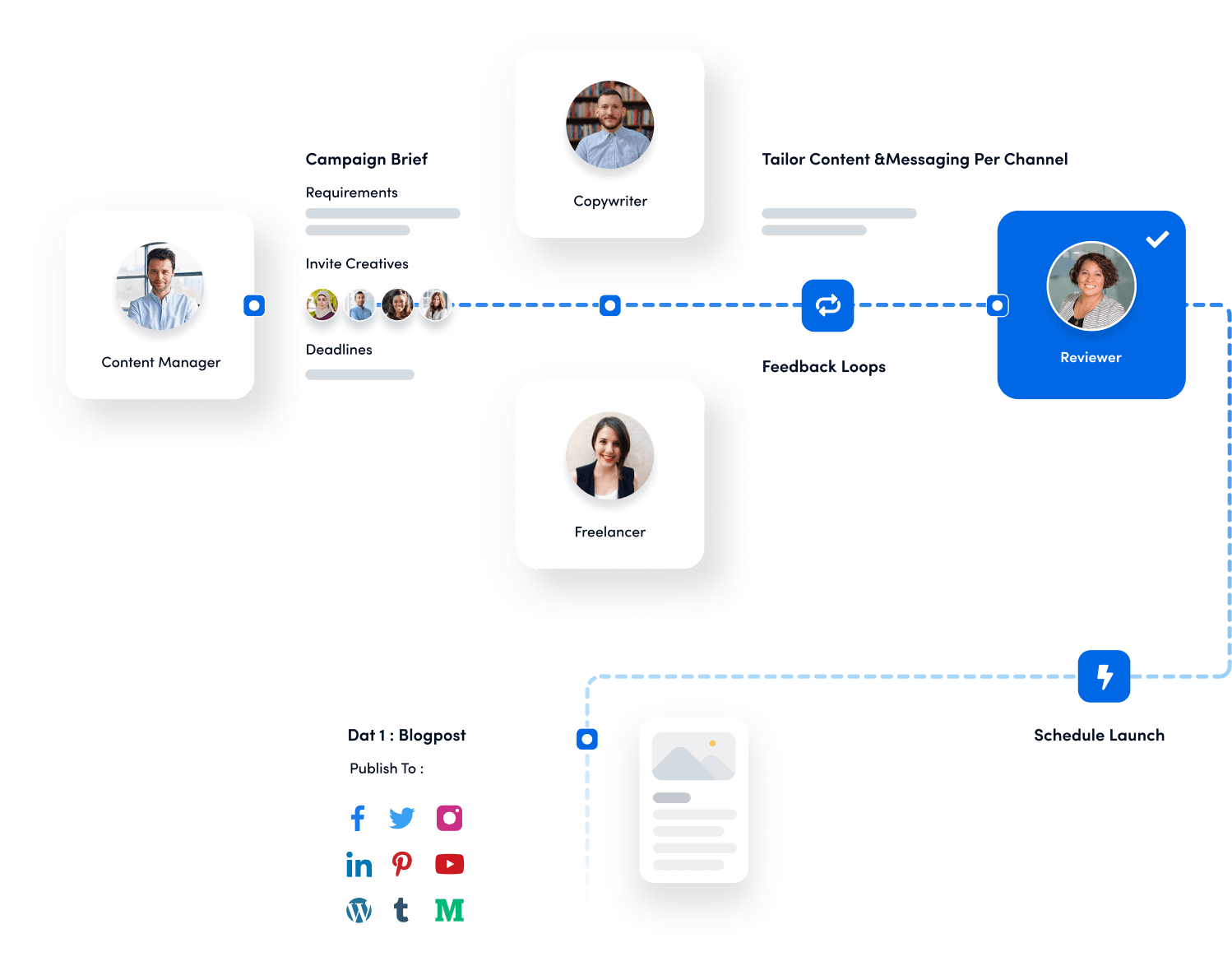
FAQs
What does omni-channel marketing mean?
Omni-channel marketing is a structured approach to campaign design that uses all major channels, brick-and-mortar locations, mobile apps, push notifications, websites, and social media to deliver a consistent brand experience.
The focus is on letting customers move between channels without losing context.
What is an omnichannel strategy example?
Starbucks Rewards is a strong example of an omnichannel marketing strategy. It is a customer loyalty program that connects the mobile app, website, and in‑store experience.
Customers can load funds, earn points, and redeem rewards across any of these touchpoints with real-time updates.
What are the 4 pillars of omni-channel marketing?
The four commonly referenced pillars of omni-channel marketing are:
- Visibility: knowing who your audience is and where they interact
- Measurement: tracking performance across channels and stages
- Personalization: shaping content and offers using customer data
- Optimization and improvement: refining your approach based on results
Together, these pillars help you design and run a dependable omnichannel marketing strategy.
Is omni-channel marketing effective?
Yes. Omnichannel marketing has been adopted by brands, influencers, and small businesses around the world because it improves the customer experience and delivers better results.
When you use multiple channels to deliver a unified message, customers feel more supported, conversion rates improve, and loyalty grows.
What is the difference between multi-channel and omni-channel marketing?
Multi-channel marketing uses several platforms to reach customers, but those channels often operate independently.
Omni-channel marketing integrates all channels so that customer data, messaging, and experience stay connected as people move from one touchpoint to another.
Recommended for you










Powerful social media management software
7-day free trial - No credit card required.